Your Customers Aren't Boring. Your Questions Might Be.
Thoughts on better customer research questions and discovery could be the missing link between engagement and conversion.
Here’s a situation worth thinking about.
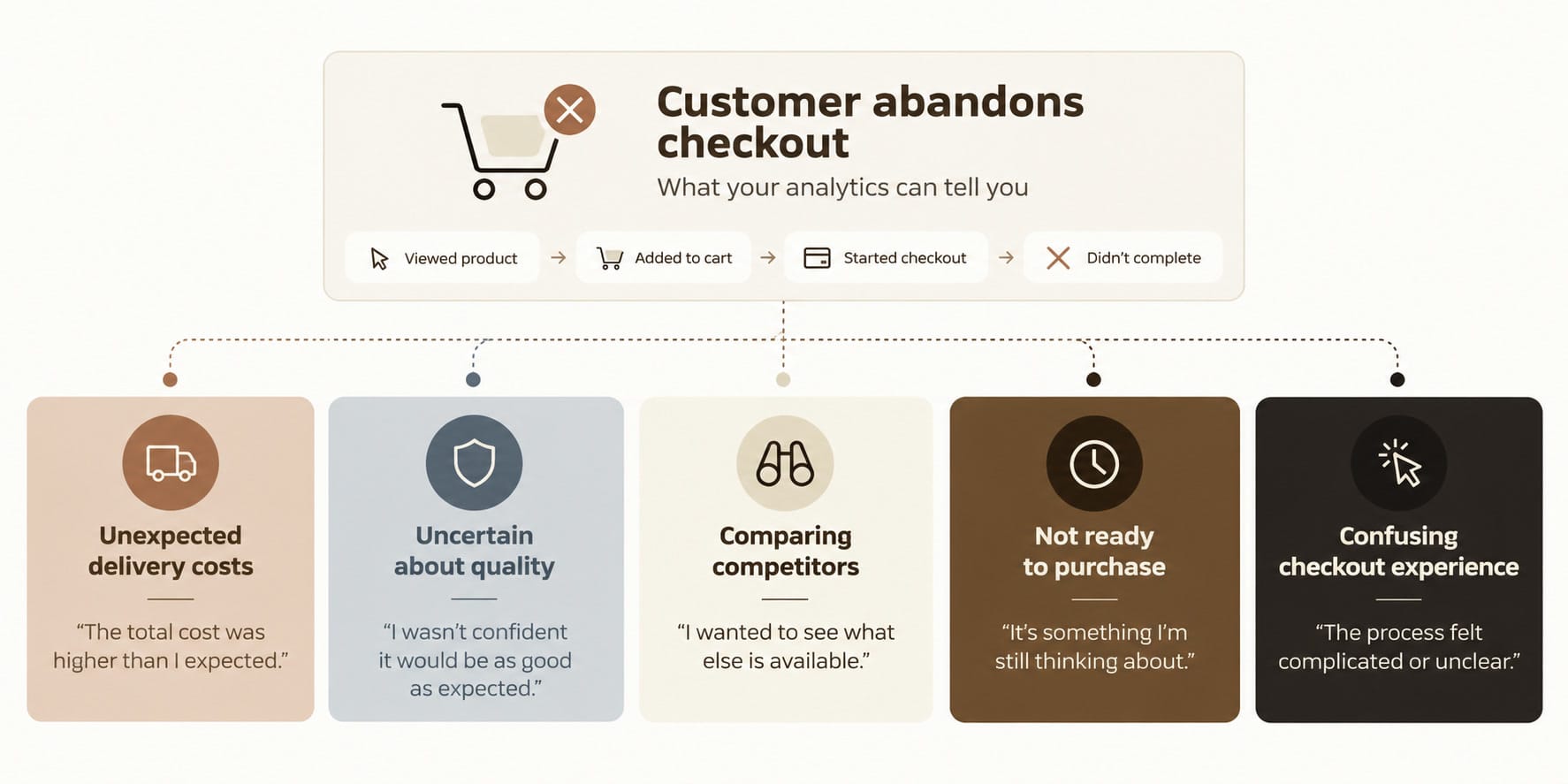
A customer visits your website three times. They browse, they click, they add something to their cart. Then they’re gone.
Your analytics shows you exactly where they dropped off. It won’t tell you *why*. That’s where most teams get stuck – not from a lack of data, but from asking the wrong questions when they try to find out.
A small poll with a big implication
At Dilog, we put this quick poll on LinkedIn last week:
”Which customer behaviour is hardest to explain?”
Small poll, self-selected, nothing statistically significant here. However, it highlights a challenge worth investigating.
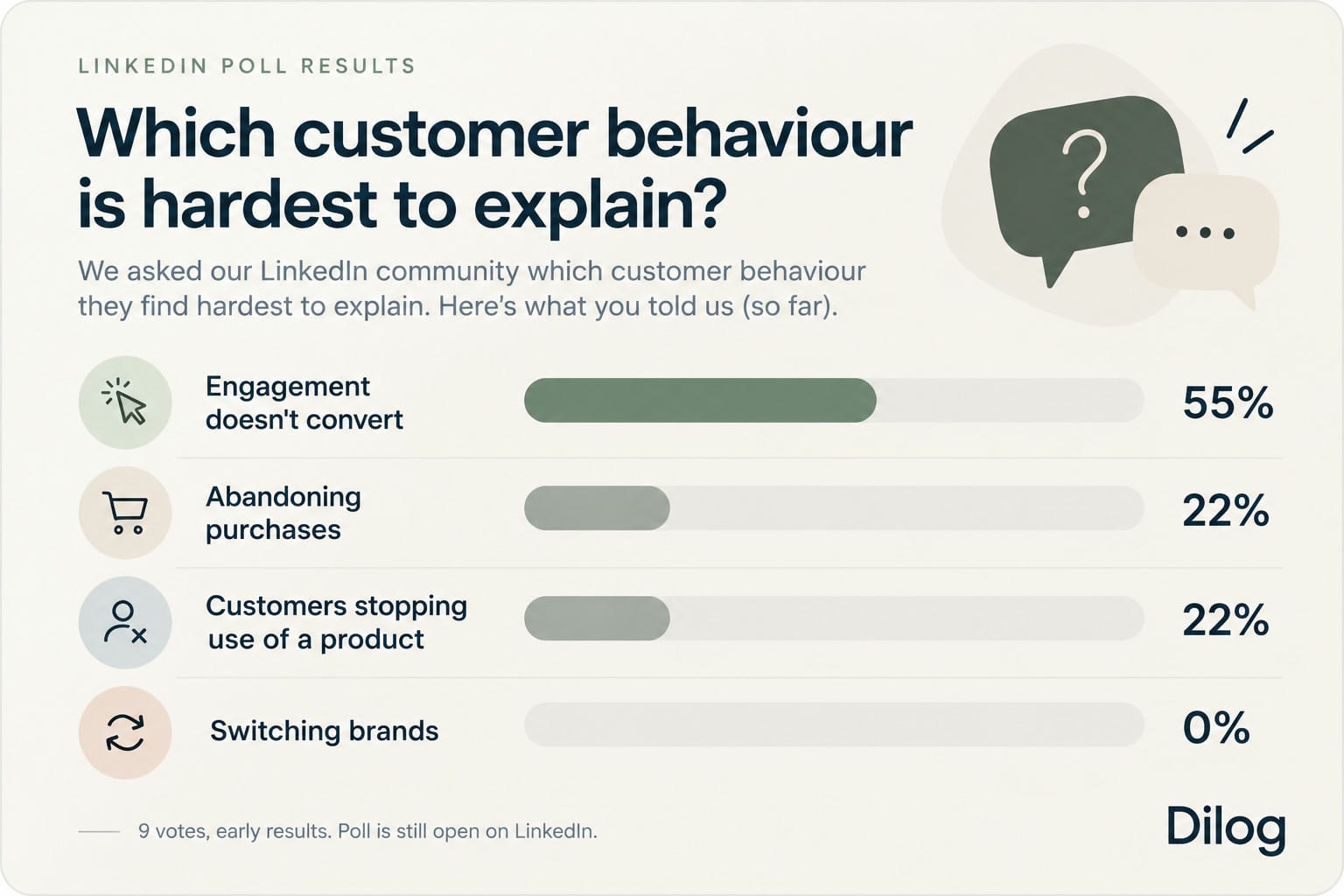
We have more behavioural data than ever: click rates, bounce rates, heatmaps, funnel drop-offs. The what is reasonably well covered. The why is still largely an educated guess for most businesses. It comes down to the taste, the accumulated knowledge of what makes a thing good, of the person making the actual decision. But no matter how good that person is, there’s still a large amount of error. When you’re making decisions based on guesses you think are insights, that’s a problem.
Same answer. Four different problems.
Take one of the most common research questions in customer feedback:
”Why didn’t you buy?”
You’ll often hear something like: “It was too expensive.” The tempting move then is to lower the price. But as most experienced managers would know, “Too expensive” could mean any of these things:
The value wasn’t clear enough to justify the price
They weren’t confident in the quality
They were still comparing with alternatives
They were waiting to see if a discount would land
Each one of those is a different problem. Each one calls for a different response. The above isn’t even a comprehensive list of possible reasons! The question “Why didn’t you buy?” will almost never tell you which one actually applies.
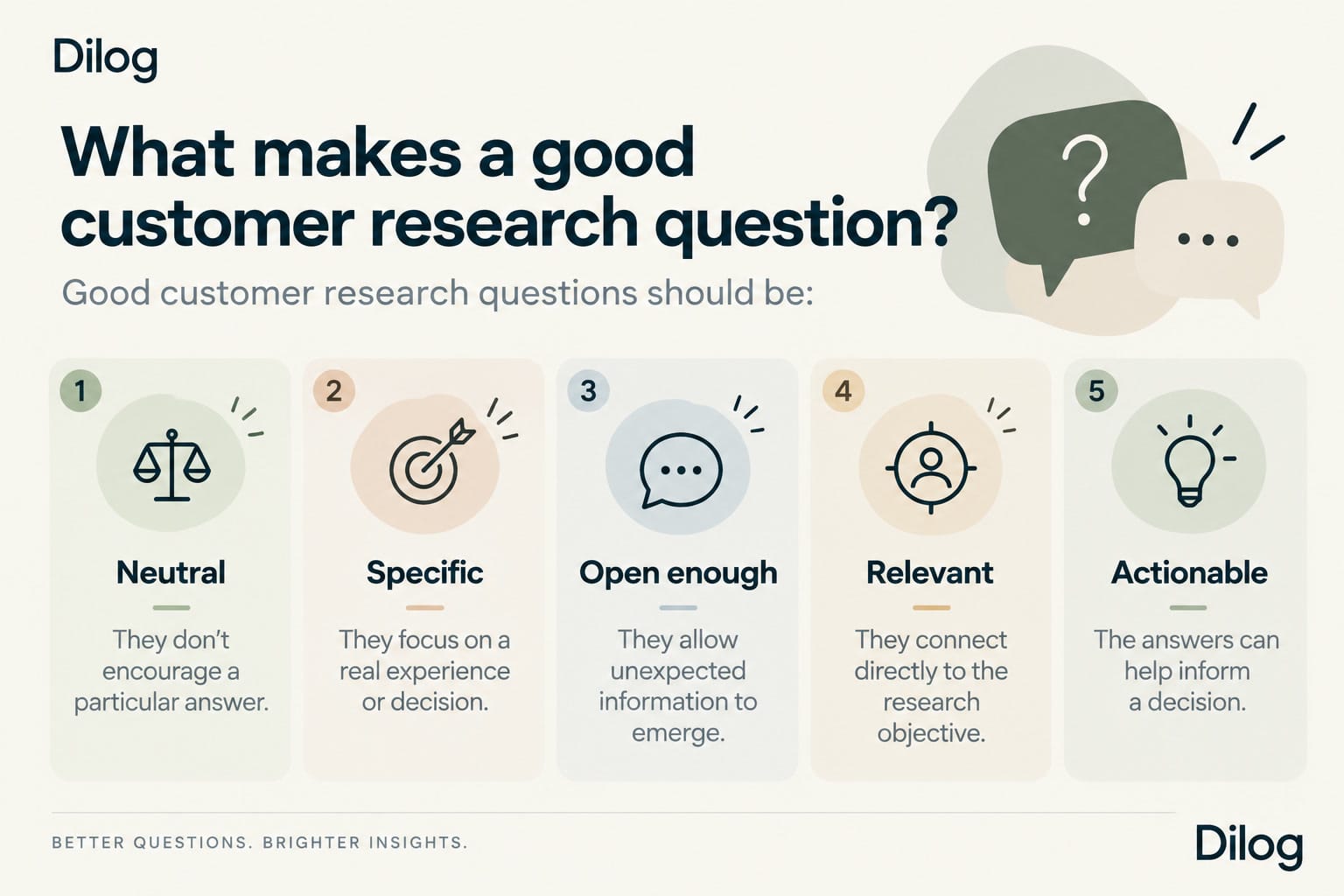
Try this instead:
”What were you considering when you decided not to go ahead?”
Then follow with: “Was there any information you were looking for that you couldn’t find?”
That shift in framing opens a conversation rather than collecting an answer. You’re exploring reasoning, not confirming assumptions.
A real brand, a real test
We wanted to see how this thinking played out in practice.
Terry Tribe is a new Australian family lifestyle brand, about to run their first Meta campaign ahead of Black Friday. There is no historical data to draw on. No previous campaigns to reference. Just a genuine question: *what will make someone click?*
We built three creatives:

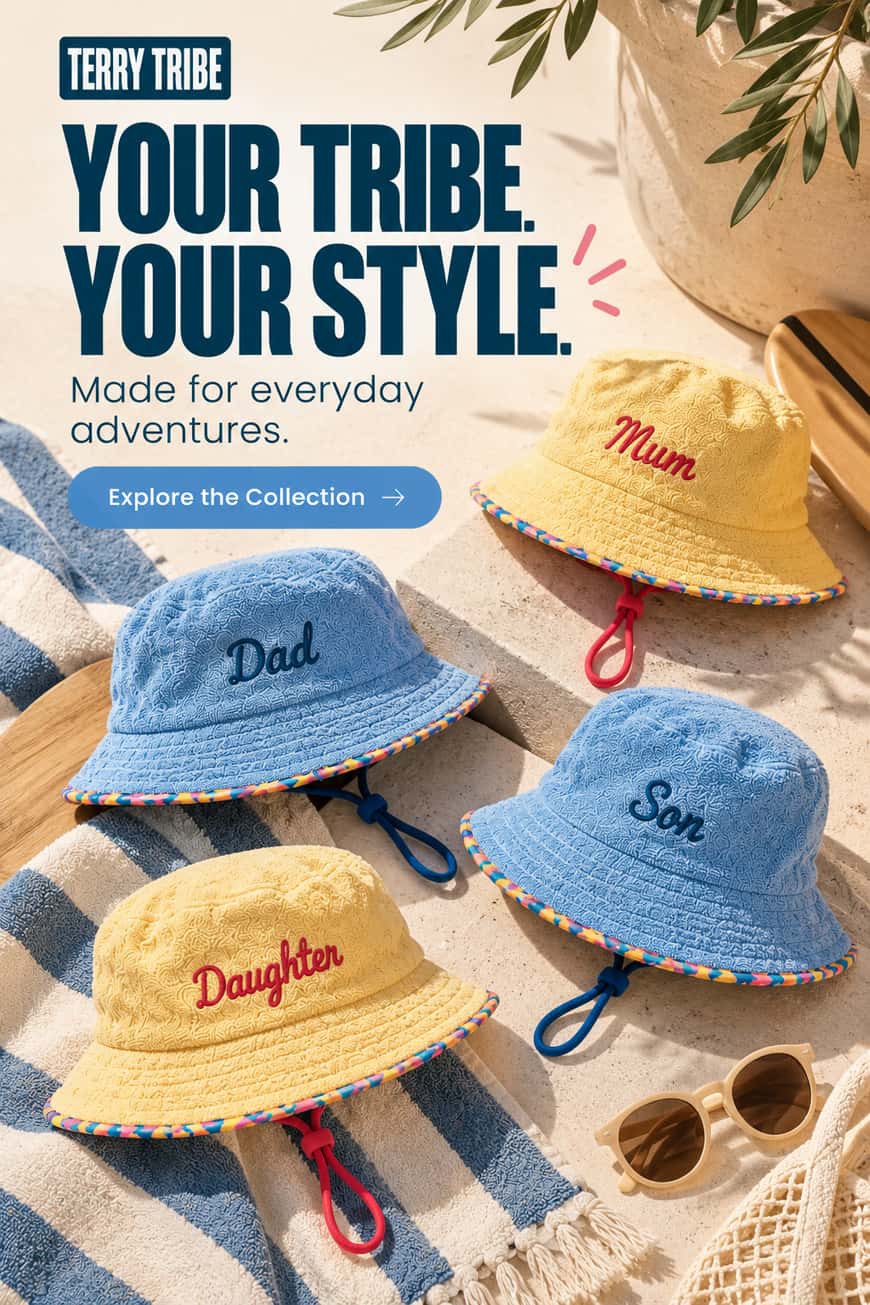

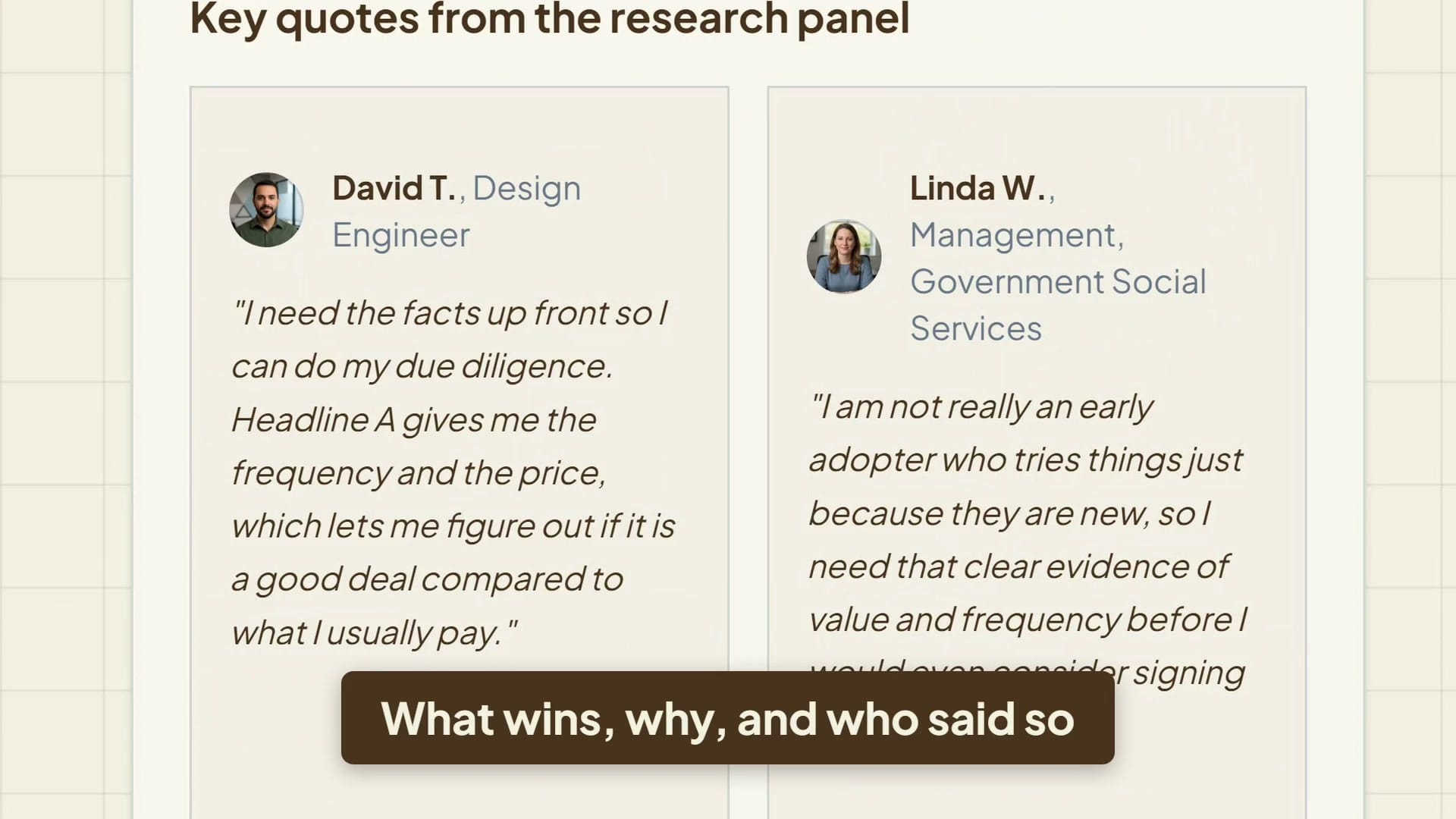
We ran each through Dilog’s simulated shopper profiles – a panel of agentic twins of real customers, based on real 1:1 interviews with Australian consumers. The aim wasn’t to pick a winner based on aesthetics. It was to surface hesitations: what information is missing, what might create doubt, what’s worth testing before the campaign goes live.
The standout finding: 55% of simulated profiles wanted clearer pricing or discount information before they’d consider clicking. The feedback also flagged the value of family imagery, trust signals, and social proof.
We redesigned all three ads with that in mind: clearer value messaging, stronger trust cues, sharper calls to action. Next step was to actually test. Using a panel of agentic twins, we’re one revision through before even starting testing.
Now we wait and see if it matters.
After the campaign runs, we’ll share the actual Meta results – what worked, what didn’t, and how closely the simulated feedback mapped to real shopper behaviour.
It’s a genuinely interesting question, and we don’t know the answer yet. That’s kind of the point. 👀
Try it with your own question
Start your free trial and put your first question to a real customer panel in minutes.
Start your free trial