As I listen to more execs explain how they are adopting AI techniques and tools within their organisations, I keep on thinking of the dangers of doing things piecemeal.
Over the past year, I’ve talked to a lot of business leaders and executives leading Australian businesses. In regards to AI adoption and making it work well within their organisation, it can best be described as a scramble. In Australia at least, some are making smart, intelligent changes, constantly testing new tools/models/approaches as they come out and adopting what works. Others are viewing it as needed but implementing in a “test-and-see” ad-hoc fashion, while still others are left feeling confused and parking any major change until “things mature”. For the latter group especially, it’s common to have annoyance at yet another disruption to deal with, an “must do” item added to the mix while they get on with running an existing business.
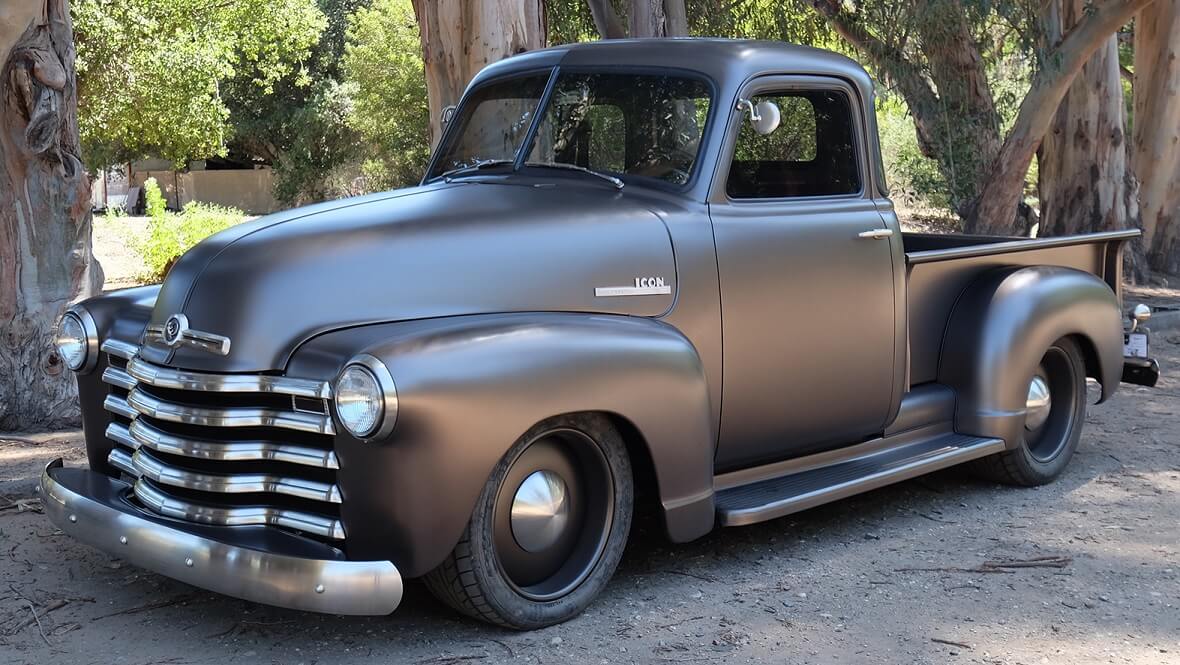
For those more in the middle and latter camps, it may be helpful to consider this farm truck…
Well, it’s not really a farm truck. This is a Icon 4x4 Thriftmaster, and while you could use it in a paddock it would be like using a Ferrari for weekly grocery shop.
I’m starting to use this truck as a thought framework on how businesses are approaching AI utilisation. That makes sense when you know that the Thriftmaster is something almost unique, looking like an old restoration project on the outside while being a modern performance luxury vehicle in every way that counts.
For background, Icon is a legendary small batch car company out of LA. The kind of place where if you have to ask the price, you probably can’t afford it. When the founder couldn’t find a wheel he liked for one of his models, he started milling them from solid aluminium. That’s the insane level of attention we’re talking about.
They started as a restoration shop. The problem with restorations: you become almost a martyr to drive one, because automotive tech from that era genuinely isn’t great when you’re used to modern cars.
But you can’t just upgrade an old car with modern parts. It’s not something that can just be done incrementally. Drop in a more powerful engine, and the transmission blows. Upgrade the transmission, and the old chassis and brakes can’t take it. Icon stripped everything down and redesigned from the ground up. Same look: the classic 1950s farm truck, keeping the hear and soul. Completely different everything else.
That’s where AI adoption sits right now, for a majority of businesses we are talking to. Dropping some AI approach or tool in to improve performance, and being curious when the results aren’t as expected.
AI adoption really ramped when LLM’s got good enough at coding that “vibe coding” was coined. LLMs were developed pointing at coding first, because code is a logical language structure. It worked. Engineering production costs dropped, development timelines compressed. But in many instances, the output accelerated faster than the rest of the business could follow. Sales, ops, customer service, decision-making still running on the old chassis, or a patchwork of old and new approaches.
We’re seeing this clearly with engineering teams. Productivity per engineer is genuinely through the roof. But executives aren’t all seeing it in the bottom line. The new engine is running. Everything connected to it is still farm truck.
Like Icon, you can’t just drop in a new engine. Things break downstream of engineering. People don’t have the tools to keep up, managers don’t know yet what “good” looks like from AI output, evals aren’t in place, UX/CX research is skipped as there’s no time or budget.
An more systematic approach is seen with some companies. These execs are mapping out critical paths and clearly setting up tools and solutions needed to avoid bottlenecks and failures, while being clear eyed that the space is evolving so quickly that much of this will be replaced shortly.
You’re doing this while the business is moving. Things break during adoption. This is a genuine digital transformation, not a SaaS tool you bolt on over a weekend. Worse, solutions for needs that are only just becoming clear don’t exist yet. The approaches are being built while you’re still figuring out the questions.
Which makes it easy to understand the viewpoint of some business leaders, that the sector is in flux so much, that taking a slow approach and waiting for solutions to become clearer is a prudent option.
That would be a mistake. The time to think and start implementing is now, to realise both productivity gains as well as institutional experience in agentic operating.
Companies that redesign operations around AI speed and scale are going to outrun those that leave systems alone as “good enough,” or change them piecemeal. It’s early days of software eating the world again, a clear paradigm shift.
Put another way, those that do the harder work of retooling end-to-end operations with AI in mind now will be leading the race in something like a Thriftmaster. That advantage should compound with experience.
Those that put it off can enjoy that race in their farm truck. You’ll probably be out in a paddock soon enough.
Try it with your own question
Start your free trial and put your first question to a real customer panel in minutes.