Black Friday - testing email subject lines
Learnings with Australian consumers from subject line testing approaches.
Black Friday email strategy is usually argued in the abstract. What approach to take? What offer and callout would make the most people click on the email to open it? What tone would cut through to people? All to focus on increasing the eDM open rate, giving a better overall start to this channel on the largest shopping day of the year.
We tried something more direct: put a real inbox in front of a panel and ask them to pick.
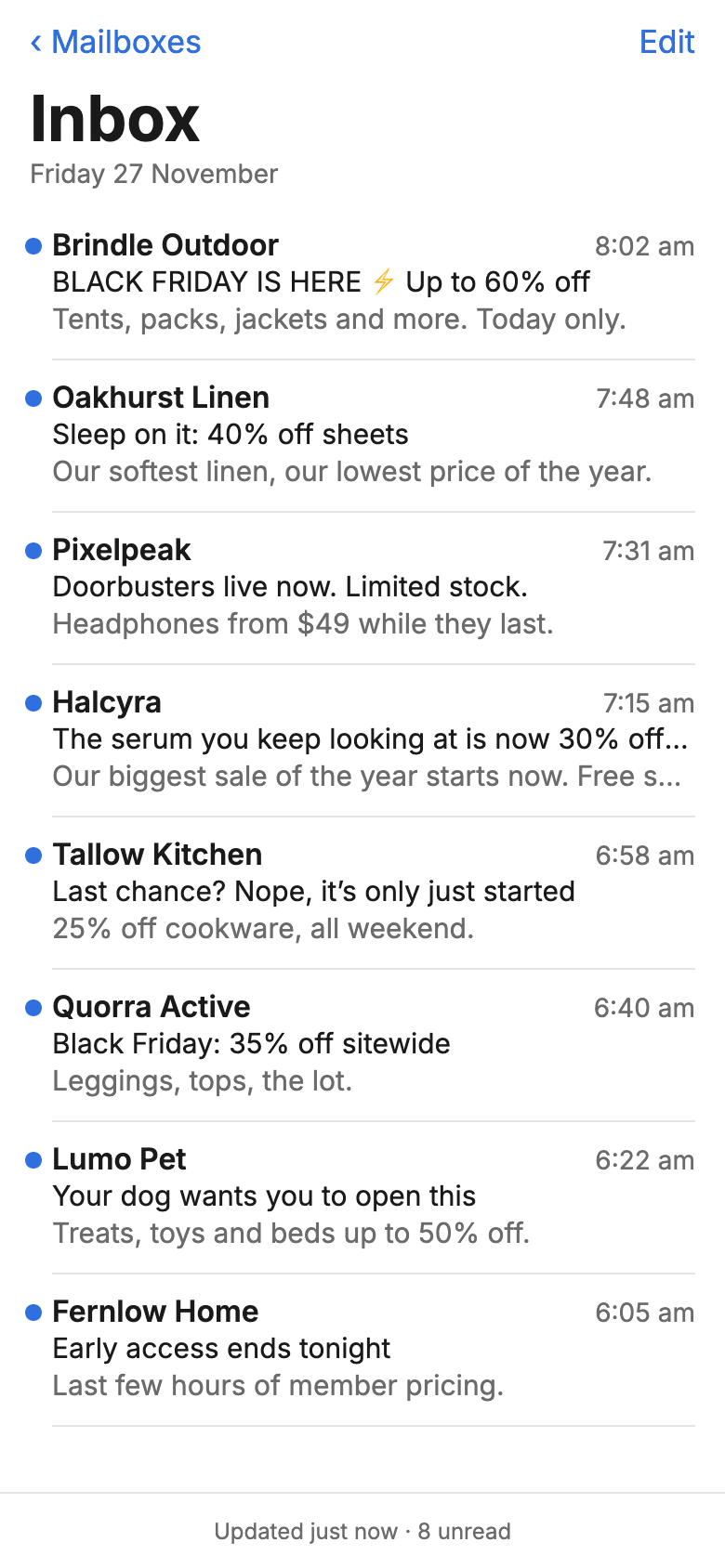
The test: 08:00, Friday 27 November. A Dilog panel of women shoppers opens their inbox on mobile. They subscribe to Halcyra (a simulated Aussie skincare brand we use for testing) and are generally interested in the products. The inbox shows them three versions of the same Halcyra row, with only the subject line changed. Which do you open, and what made it stand out?
Note, we included one line that included a mention of a wishlist feature.
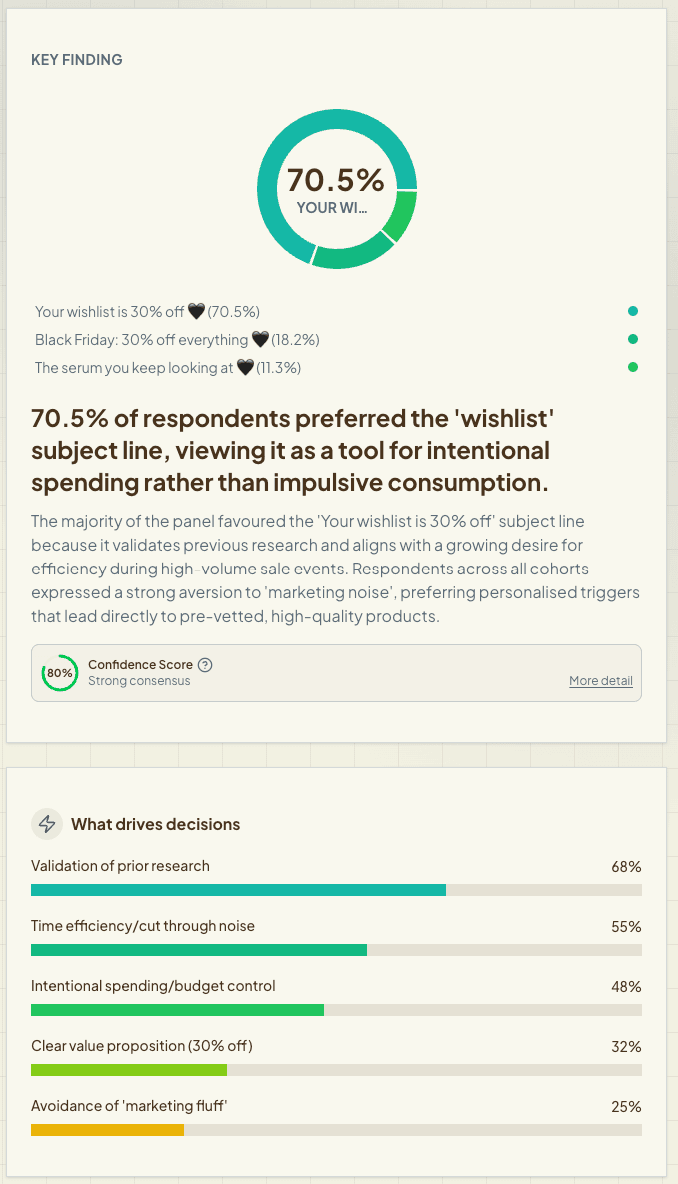
Three lines: “Your wishlist is 30% off,” “The serum you keep looking at is 30% off,” and “Black Friday: 30% off everything.”
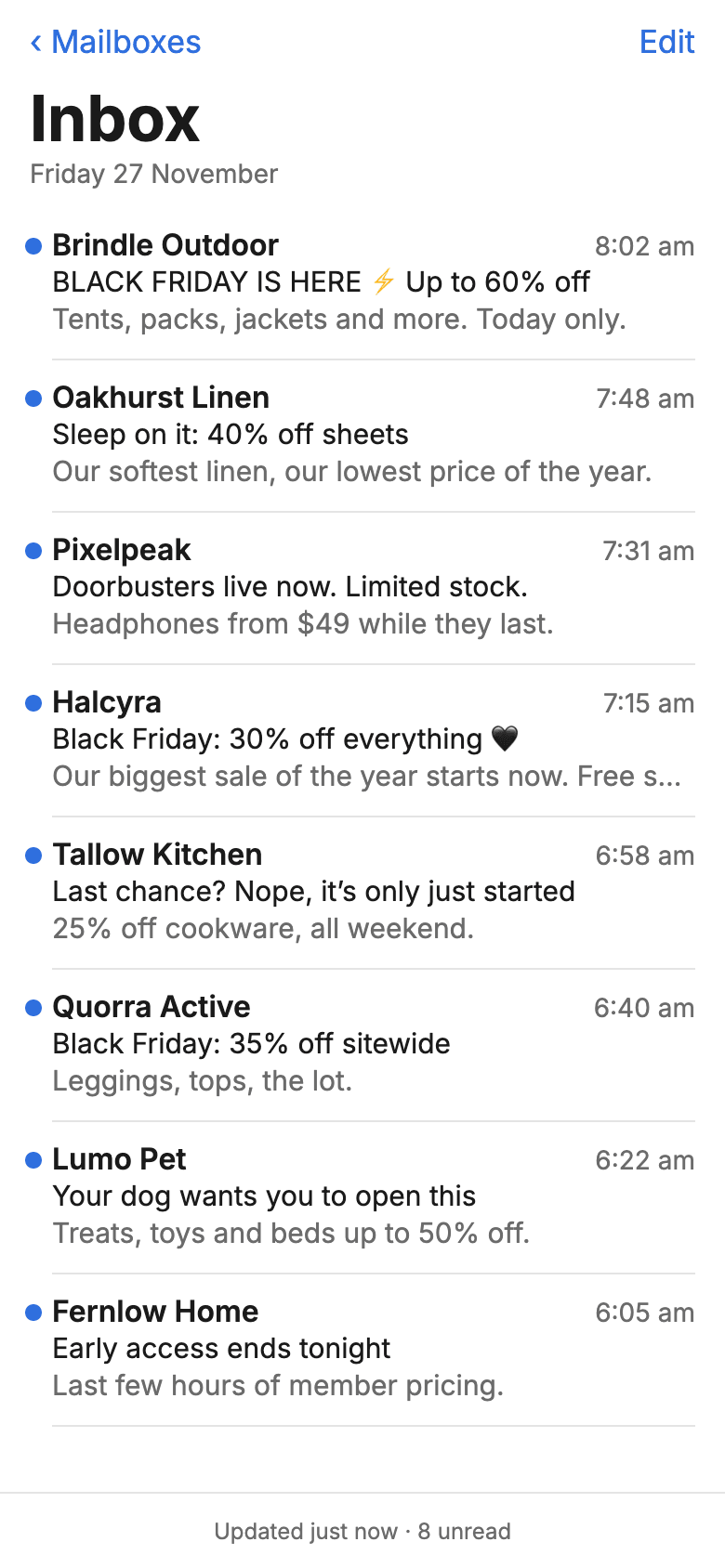
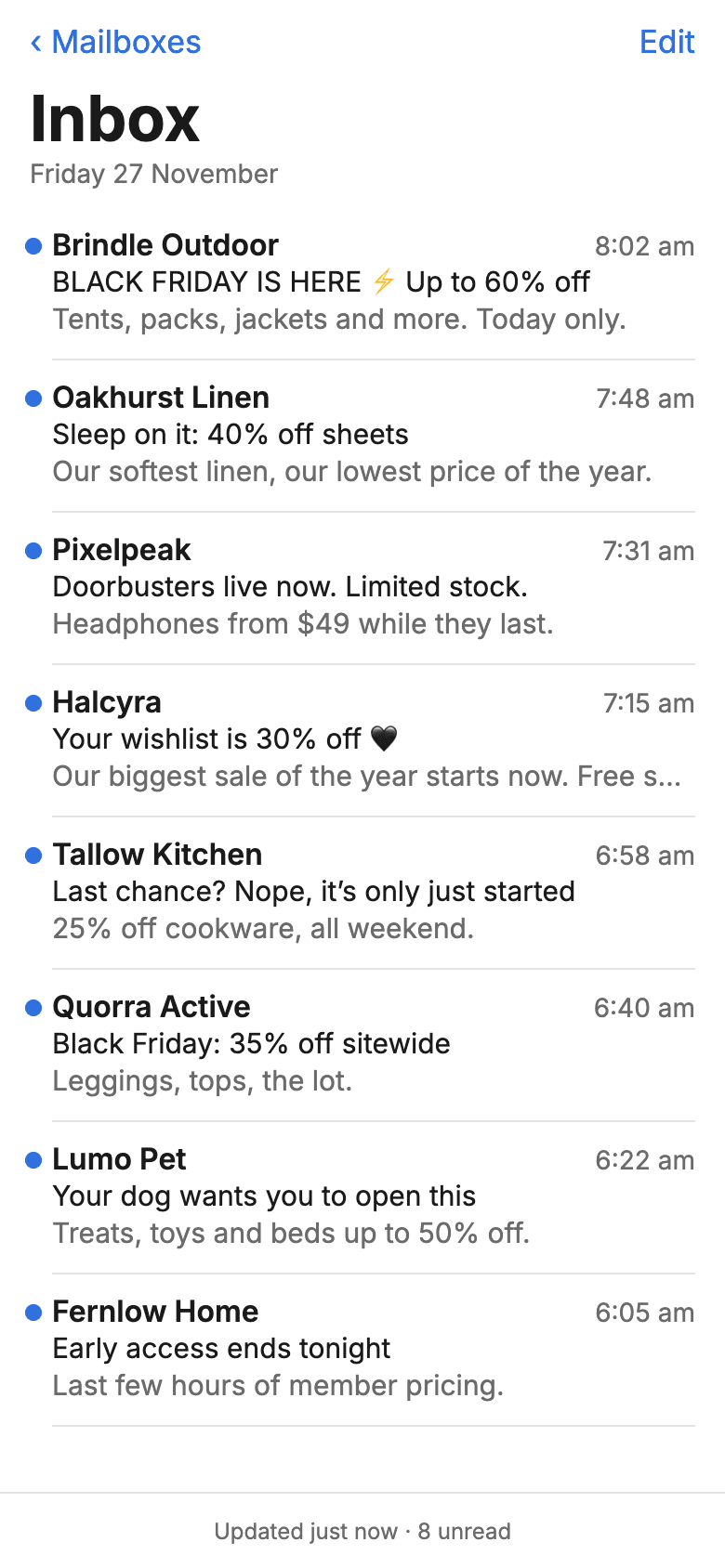
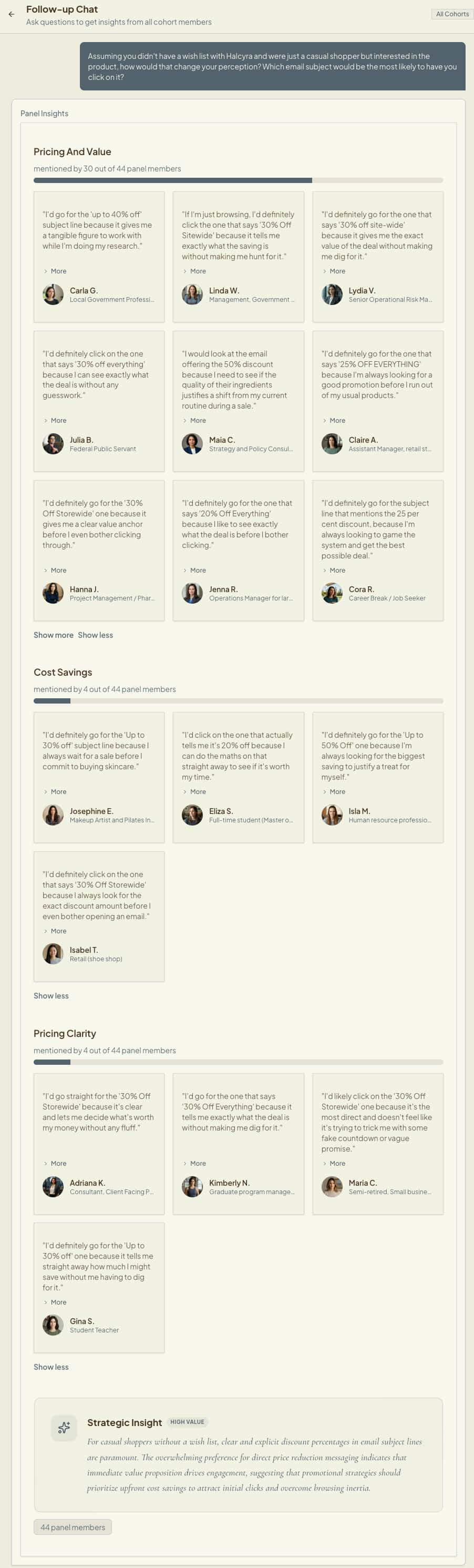
The overwhelming result was a 70.5% preference for the wishlist, assuming that they had used that feature. When we removed that as an option for shoppers, the main selection was for the clean callout of discount and value with the 30% off everything (with 68% of users then preferring that subject line). Most shoppers highlighted the clarity and “less work” of having that clearly put in the subject line. Almost nobody wanted to click on the option highlighting discounts a past item browsed.
Verbatims and conclusion from when we remove the wishlist option.
A product the shopper put on a list beat a product the brand saw them browsing, with identical discounts on both.
Why? Because saving something is a decision, and looking at something is just looking.
Efficiency was the top reason the panel gave (84%), and the quotes make it plain: nobody wanted to wade through a whole site on Black Friday morning. The wishlist had already done that work for them. “I’ve already done the YouTube deep dive and checked the ingredients to make sure it won’t burn my face off,” as one panellist put it. Another preferred it to being “sucked into a marketing trap for things I haven’t researched yet.” The serum they’d only browsed was still a maybe.
The sharper version of this, from Anya R. in the panel: she didn’t want to be “sucked into a marketing trap for things I haven’t researched yet.”
This isn’t about the copy on the subject line. It’s about where the shopper is in their own process.
This comes with a big caveat. Most retailers don’t have things like a wishlist. And only about 30% of online shoppers use wishlists. Around half never touch them. For everyone else, the rerun follow-up showed a clear discount number with no “up to” hedging was what moved them. The cleaner the number, the lower the cognitive load. So a line of “30% off everything” beats a “up to 40%”.
If you have something like this as a feature (or taking from previous abandoned carts if feasible) it may be worth including it in a Black Friday subject line. Wishlist holders get the personalised line. For the rest, keep it short and simple. A direct discount number they can act on in a second or two.
This is test three in our Black Friday series. Directional data from a simulated brand and panel, but the result was clean enough to be worth sharing. If you want to sense check your own planned copy, or compare against a competitor’s from prior years, take advantage of the free trial at Dilog to run your own testing.
Try it with your own question
Start your free trial and put your first question to a real customer panel in minutes.
Start your free trial